The Garden Without You
January 15, 2026This is a bit more of a serious personal post, it’s going to explain the lack of a '2025 Summer Season: Review', while also serving a very similar purpose. The post will also attempt to be more than me mourning a bad season, also being a place to reflect on how to handle a season this poor. Which plants are salvageable after neglect, and what does perfectly fine without you?
1. Summer blues
This section is the personal vent part, if you are more interested in the practical side of this post you can go to chapter 2. You should also jump to this chapter if you find it difficult to read about mental health and existential thoughts.So, 2025 was my second year I lost all of my vigor by July, and so everything fell apart like a house of cards. I tried really, really hard not to repeat what made 2024 so difficult, and part of me thought that this website would fix everything. I have found a wonderful community of people that want to see me succeed, and I have suddenly cultivated a platform to explore new ideas and set new goals. I am very goal-oriented, and I thrive during large projects and a bit of exciting stress.
Until I don’t. When I fail, I fail hard, and I punish myself quite severely. This time I didn’t only punish myself for abandoning my plants, but I also felt the existence of the website crushing me. I had to keep taking photos and upload them. I’m so late on the season review, my blog is underdeveloped, I need to continue the abandoned garden crops list and oh god- I forgot what this instant noodle tasted like! How am I making an exciting season review when my garden looks SO BAD and I killed so many plants?!
My inability to say things as they are becomes pretty clear here, because I have refused to address that 2024 was a bad season. What kind of educational blog am I if I refuse to show when things get ugly? I end up no better than the pristine instagram feed romanticizing an unattainable morning routine!
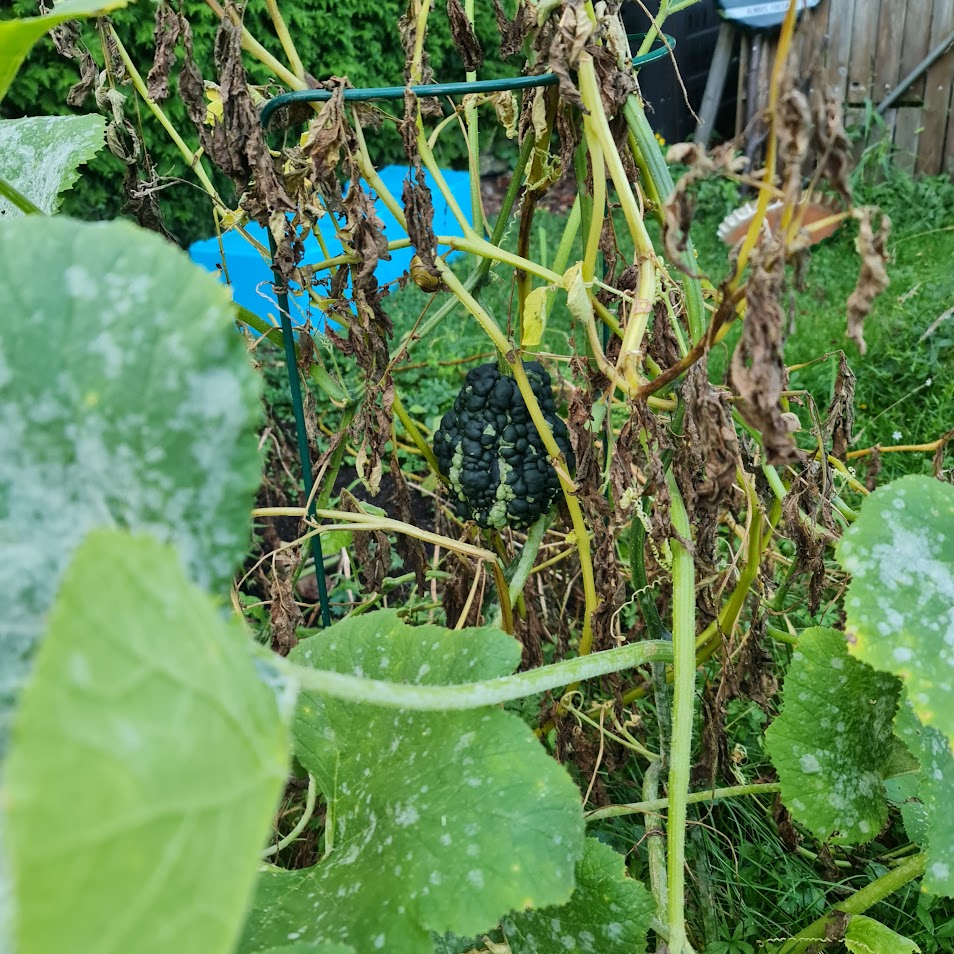
My insane perfectionism is probably one of the reasons why I got so much sicker this year. When I was at absolute rock bottom, rotating between the ER and stressed phone calls, I realized I couldn’t just sit around and let the cycle repeat. This was not going to be a problem I would fix by working hard enough. I would not be healed by looking forward, merely hoping I would come out on the other side eventually, once again starting the ascent up some perilous cliffs all by myself.
I realize I continue to severely underplay my anxiety disorder, that demon on my shoulder that rears its ugly head whenever it suits itself. It makes me feel vulnerable, because I am known to be so positive and comfortable in myself. Being such a productive personality, it is a very strange thing to sit down and say “I’m convinced I’m dying every day, and I’m so obsessed with planning my own funeral.”
My intense fear comes from all of my unfinished business. After all, what is my garden going to do without me? What will I leave behind? Will I leave an important mark, and will my life have a satisfying conclusion? And so I incapacitate myself, because I act like I am already dead.
I started my cognitive behavioral therapy in October of 2025, and it was the first time I've met a mental health professional since 2020. I love fixing things by myself. I hate putting in all this energy and effort, having to do my annoying trek into town to fix my stupid mental health. I refuse to talk about how I really feel, and I am so stubborn about being the friend that does not complain. I want to be someone you can continuously rely on. In times of being vulnerable, I suppose I just have to admit that I can’t be a perfect example.
I’ve remained a little skeptical about my treatment being successful, and I need to admit that I’m not better. I understand I’m not supposed to be better immediately, and the journey is going to continue for some time. It has to continue, because I refuse to get so sick again. I need to come to terms with that when I am sick, I need to stop trying to do or be so many different things. I gotta drink a cup of tea, tuck into bed, and realize that having a beautiful garden is just this absurd expectation I’ve pinned on myself.
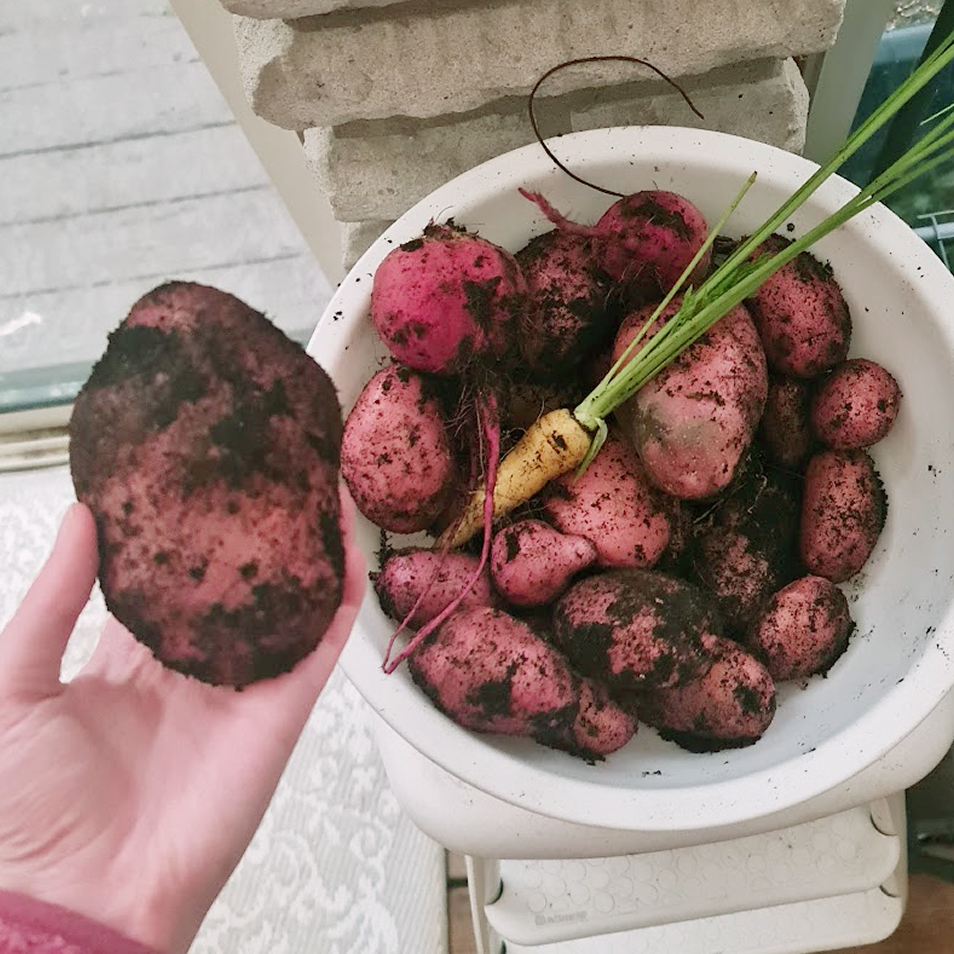
Image: I only harvested one carrot in 2025.
As a closing thought, I would like to repeat what I wrote in a little blurb featured in the Photo Album, because it was probably the most cathartic thing I managed to squeeze out of myself after this year of hardships:
It remains true that the harvest in 2025 was nothing to speak of, but I also realized something else. When my psychologist asked me to find a happy place to return to when I'm going through the worst of it, I closed my eyes and saw my garden, my flowers, the bees and the bugs. Finding that underlying spark, I suddenly understood myself a little bit better. I just really really love this stuff. Even if seasons come and go, if my garden is wilted and not beautiful, the mere idea of it remains my sanctuary, and my greatest relief.
2. What happens without you?
Here’s the gist of this post and the reason for its title: What happens to the garden without you? Having abandoned the garden responsibilities for two years in a row now has also contributed to an unexpected amount of experience. You realize what survives, what doesn’t, and what plants quite simply goes through changes. This is as frustrating as it is educational, because if you want a low effort year, there are indeed plants that will do much better than others.With this post and this section I would like to help the less motivated gardener, the beginner, or the struggling idealist (-like me!). Some plants start easy and later require upkeep, and other plants are hard in general, or prove to be hardy. First I will outline some basic impressions in text, followed by a plain list of notable examples.
Here are a few of the main things that doesn’t happen when you, well, don’t garden: You do not water or fertilize, you do not prune or weed, and you fail to detect pests, disease or weather events. The consequences of this varies drastically depending on how you started, and when you stopped. Most importantly, if you live in a hot and dry climate you are dealing with a whole different scenario than me. I live someplace wet, where the watering part becomes less critical (but the wet also makes slugs a significant problem!).
There are a few plants that are impacted quite significantly by abandonment and a lack of fertilizing. Over all, your harvest is going to be significantly smaller, your plants will be smaller, and they will wilt much sooner in the season. This is most evident in cucumbers, and the general gourd family. This is because cucumbers and watermelons have very large and elaborate root systems, that stretch infinitely into a delicate web. They love space, and when there is no space, they suffer very quickly.
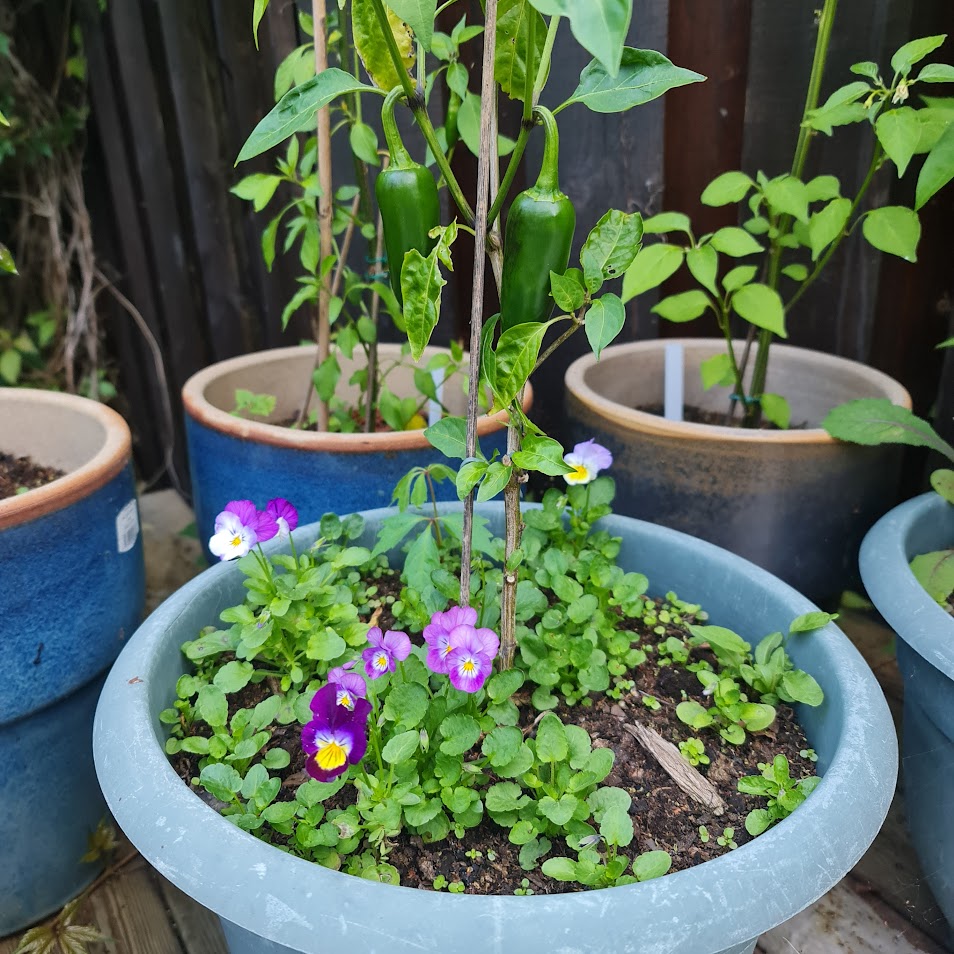
Image: Without my supervision I had pansies self-sowing in my jalapeños!
You will have a greater problems with weeds in a growing bed compared to in a container garden. At the same time, there are a few strategies you can apply to fight weeds without weeding. It means that this following advice is a preventative method you can apply when you have the energy to start. This is the task of companion planting, or using the “three sisters” or similar methods. With a mix of plants in a well-planned area, you can have low and wide plants, like pumpkins, to choke out light from underlying weeds. On their sides you can grow vining plants, such as beans. You fight fire with fire, and plant a shield that weeds can’t breach in the first place! I usually do this by lining my planters with flowers.
Finally, I have problems with harvesting when my energy is low, meaning that perfectly fine crops wither and rot. This has proved to become a moral dilemma, a source of frustration, and an unreasonable expectation. This is one of those parts I do not pin on myself, but others pin on me. “How could you waste food?” groans my mother, “Food is too expensive for you to fail this harvest.”
What am I wasting? The bugs, the fungus, the bacteria and the ecosystem in the soil are loving all of these nutrients! My mother hates this answer, and she hates that the source of my motivation isn’t stocking her pantry. I do not garden to eat, I garden to garden. An insane thought, and a privileged position, am I right? No, really, gardening as a hobby has only ever been a big money sink, and gardening is way more expensive than buying a bag of potatoes from the grocery store. I can not feed people from one bed, and I do not intend to. You should not either, because you are having fun.
It all wilts in the end. If you’re not consuming it, somebody else will be very happy to do so. So, why do you garden? Why does this matter to you? This is where your own expectations need to start and end. Yes, I realize I do not practice what I preach when considering the topic of this post, but perhaps I want to say it out loud, to really squeeze that fact even deeper inside my cranium. It is time to be less harsh, and see gardening for what it is. It is not farming. It is some frivolous little dance in your own backyard.
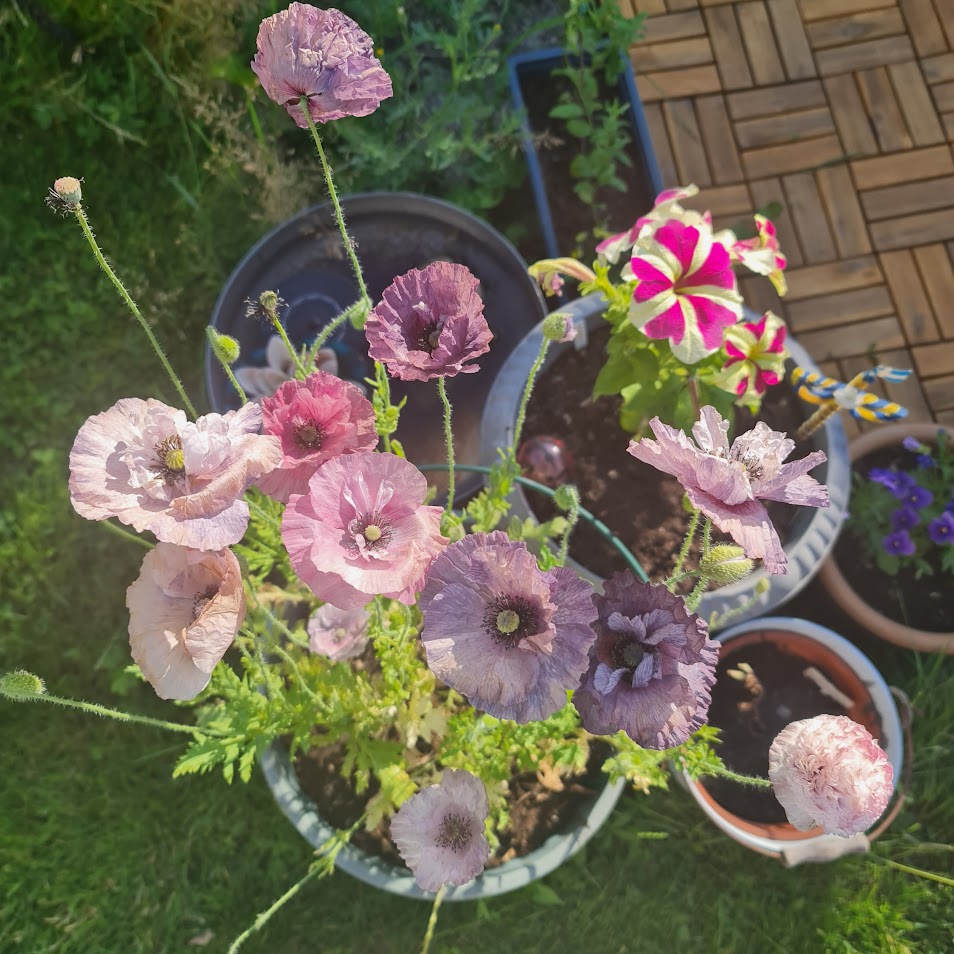
Image: These poppies,'Amazing Grey', were my crowning achievement of 2025, yet I didn't have the energy to post them.
3. List: Easy peasy!
Here I present you a list of easy to sow, easy to grow delights. If you have a rainy enough climate, you can stick these directly in the ground and get a lot out of very little effort. This list displays the easiest way you can possibly garden.1. Wildflowers
(E.g. poppies, marigolds, cornflowers, clover, borage and other natives to your area)
2. Potatoes
3. Leafy greens, bok choy and baby leaf lettuces
4. Beans (Psst! These also improve your soil!)
5. Peas
6. Nasturtium
I would also list root vegetables such as carrots, radishes and beets, but these are extremely susceptible to pests. Even if you do your best, these plants are eaten by bugs very happily…
4. List: Hard or hardy?
This list of plants are harder to start, and you need a head start in order to get a harvest. This means plants that you may need to start indoors, that require a few transplants, and finally requiring a decently sized final growing space. After ticking these first boxes, these plants survive well without intervention.1. Tomatoes
2. Celery
3. Chili
4. Strawberries
5. Flowers like pelagornium, petunia and snapdragons
5. That’s how it grows
Even if I’ve had my failures and punished myself quite excessively, I will not stop gardening, and I will not stop growing things even if that means failing all over again. It is not even productive to call this a type of failure, as I will continue to convert the thought of it into persistence. I have now entered another stage in my life, and a brand new scenario is on the horizon. Not only am I getting help, but I no longer have access to my garden in 2026 after having moved. It’s going to force me to take a step back, temper my expectations—and not grow such an insane amount of things all at once! I am going to mourn many parts of this, and I am going to continue to stare at my unused seed packets and dream for something much bigger. This is both my biggest flaw and my greatest strength.Take care of yourself.
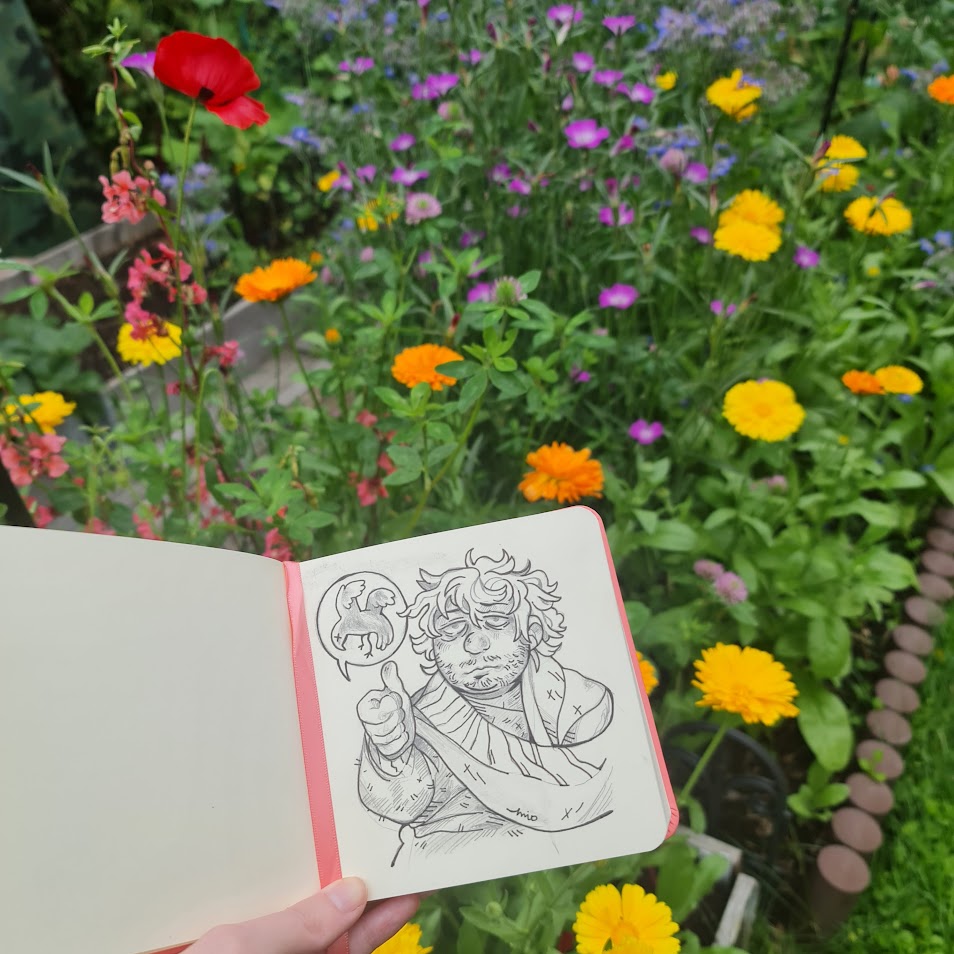
P.S. I wonder how my wildflower bed will look like this summer… Will they grow strong and remain beautiful even when I’m not there? I believe so.